
Teen Patti withdrawals are where people get stuck. Because Teen Patti cashouts sit on “processing”, a bank name doesn’t match, or a UPI transfer reverses later.
This page is a practical guide for India. It is for adults only (18+). It is not legal advice and not tax advice. Rules can vary by state, by app policy, and by payment provider. Nothing here is a promise of winnings, refunds, or instant payouts.
If you play Teen Patti for real money, treat withdrawals like a process you can control: keep your account details clean, understand what each status means, and know what to do when money doesn’t land on time.

A Teen Patti withdrawal is usually a chain of checks, not one “send money” action. You request a cashout, the platform validates your balance, checks bonus or wagering locks, and then routes the payout through the method you selected.
Two timelines run together. One is the platform’s review time. The other is the bank or UPI rail time after the payout is released. That’s why you can see “approved” inside the app while your bank still shows nothing.
Think of it as one flow: request review payout sent settlement status update. Some apps also batch payouts at set hours, so a request can sit “in queue” even when everything is fine.
A status is a clue about which step you’re in, not proof that money has arrived.
Most “withdrawal pending” cases are predictable. The boring checks matter.
Checklist to run before you tap withdraw:
These steps map to the most common blockers: name mismatch, KYC pending, limit exceeded, and bonus restrictions.
The first Teen Patti cashout is often slower because it is the first moment the platform has to prove you are you. Deposits can be quick; withdrawals trigger identity checks.
KYC usually means identity plus payment ownership. In India, that can include PAN for reporting and a document set that matches the profile name you used. If your profile says “Rahul K” but your bank is “Rahul Kumar”, that difference can hold a payout.
Manual review can trigger after changes: new device, new UPI, new bank. If you want Teen Patti withdrawals to feel routine, do KYC early and keep one payout method stable.
Most India-focused Teen Patti apps offer a small set of payout rails. The names vary, but the behavior is similar.
| Method | Best for | Typical time range | Most common blocker | What to verify before you withdraw |
| UPI to bank / UPI ID | Small to mid cashouts | minutes to 24h | name mismatch or inactive UPI | profile name, active VPA, linked bank |
| IMPS bank transfer | Faster bank payout | minutes to 24h | bank downtime | account number, IFSC, IMPS availability |
| NEFT bank transfer | Larger amounts | same day to 3 business days | manual review or bank cut-off | limits, cut-off time, KYC tier |
| Wallet (if offered) | Convenience | minutes to 24h | wallet KYC or caps | wallet KYC status, transfer limits |
UPI feels easiest, but it has edge cases: VPA format errors, wrong linked account, or daily bank limits. Bank transfer can be slower but more stable for larger amounts.
Pick the method you can verify, not the fastest one.
“Instant” is a marketing word. In practice, payouts have stages: requested, under review, approved, sent, completed. “Processing” can mean either “we are reviewing” or “we already sent but we’re waiting for confirmation”.
UPI timing can vary for Teen Patti payouts. On Reddit, people often describe failed transfers reversing in a few working days, sometimes closer to a week when reconciliation is slow.
A practical rule: if the cashier shows a UTR/transaction reference, the payout likely left the platform. If there is no reference, you’re still in internal review.
Step 1
Select UPI (VPA)
Open Cashier → Withdraw and choose UPI.
Step 2
Enter amount
Type an INR amount within your min/max limits. Make sure no bonus/wagering blocks the cashout.
Step 3
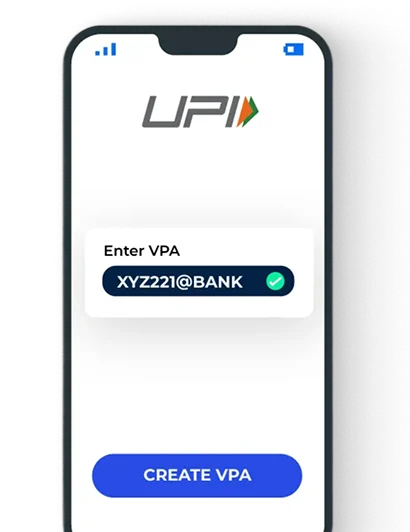
Add your UPI ID
Enter your VPA in the format name@psp and confirm the recipient name matches your profile/bank.
Step 4
Complete KYC if prompted
Provide PAN/Aadhaar and a selfie (address proof may be asked for higher limits).
Step 5
Submit & track
Submit the request, save the request ID, and track Pending/Processing in History.
Step 6
Copy UTR & receive funds)
When a UTR/Ref No. appears, copy it. Funds typically credit within ~30 min–24 h (operator/bank dependent). Use the UTR with support if delayed.

Three types of deductions can change what you receive from Teen Patti winnings.
First: platform fees. Some apps charge a flat fee or a percentage for withdrawals. It is usually shown in the cashier, but many users miss it because it appears after you enter the amount.
Second: payment rail or bank fees. These are less common for UPI, but can appear for bank transfers depending on the app’s setup.
Third: tax withholding. India’s rules for online gaming require tax deduction on “net winnings” in a user account, and tax can be deducted at the time of withdrawal (and also at financial year-end in certain cases). The commonly discussed rate is 30% for online gaming winnings.
This is why a withdrawal that you requested for 10,000 can land as a smaller amount. It is not always a “fee”; it can be withholding based on winnings logic. If you don’t understand the deduction line, treat it as a support question before you assume the payout is missing.
If you want the least drama, keep the process boring.
UPI is fast when it works, but it is also strict: wrong VPA, wrong linked bank, or a frozen bank account can turn a quick cashout into a support ticket.
If you play Teen Patti across multiple apps, use the same UPI handle consistently. It reduces “new payout method” flags and makes your transaction history easier to explain.
UPI is great for everyday payouts. Bank transfer can be better for larger amounts or when your UPI is unstable.
IMPS can be quick, but it depends on bank uptime. NEFT can be slower but is often more predictable for higher values, especially when apps apply additional checks.
If you need a clean audit trail, Teen Patti bank transfers also help. Bank statements show account credit details clearly, and support teams can track them with fewer “pending” edge cases than UPI VPAs.
A simple rule: use UPI for small withdrawals; use bank transfer for larger ones.
The words matter.
Teen Patti pending usually means the platform hasn’t finished internal review: KYC not complete, bonus locks, limits, duplicate requests, or a manual check because something changed.
Failed often means the payout attempt was made but did not complete on the payment rail. With UPI, that can be bank downtime, incorrect VPA, daily limits, or network issues. Many users report that such failures reverse back automatically within a few working days, but timing varies.
Rejected usually means the platform refused the request before sending it. Common triggers are name mismatch or trying to withdraw to someone else’s details.
If you want faster resolution, always share: amount, method, timestamp, status, and the reference/UTR if you have it.
First, separate deposits from withdrawals. “Money deducted” is usually a deposit problem, not a cashout. But the same UPI logic helps you troubleshoot any missing credit.
Start by checking the transaction status in your UPI app and in your bank statement. If the UPI app shows “failed” or “reversed”, wait for the auto-reversal window. People on Reddit often mention reversals in 1-3 working days, and sometimes up to 5-7 working days when reconciliation is slow.
If the status is “success” but the receiver didn’t get it, collect the UTR/transaction ID and raise it with your bank or payment app. Some banks and payment guides describe refund timelines like T+1 working day for fund transfers and longer windows for merchant-side issues.
If nothing changes after the normal window, raise a complaint in your UPI app and with your bank using the UTR and screenshots. Some bank and payment guidance describes auto-reversal timelines such as T+1 for fund transfers and longer windows for merchant-side cases, and it also mentions compensation for delays in certain scenarios.
Do not keep retrying the same payment. Multiple attempts can create multiple pending reversals that take longer to reconcile. Instead, open one complaint with clean documentation, then wait for the reversal window before escalating further.

When a cashout is stuck, your goal is to create a traceable case.
Start with the platform: open a ticket, include the withdrawal amount, time, method, and any reference/UTR. Attach screenshots. Ask for the payout reference if it’s not visible in your cashier.
If the platform says “sent” but your bank shows nothing, raise the issue with your bank or UPI app using the UTR/transaction ID. Keep your language simple: “credit not received” plus IDs.
If your bank or payment provider doesn’t resolve a digital transaction complaint, you can use the Reserve Bank of India’s Complaint Management System to escalate. The key is to show you already complained to the bank or service provider first, and then you are escalating with evidence.

Most withdrawal scams are social, not technical.
Be suspicious if someone asks you to “verify” by sending money back, or if they send a UPI collect request and claim it will release your cashout. Real withdrawals are pay-outs to you, not payments from you.
Avoid installing “mod” versions of apps from random links. On Reddit scam threads about India-focused Teen Patti apps, people often warn that off-store downloads and “easy money” claims are a bad sign.
Also avoid screen sharing with “support”. If someone sees your OTP or UPI PIN, your account is not safe anymore.
The safest setup is boring: withdraw only to your own UPI/bank, keep one device, and use official app stores when possible.
Set a Teen Patti withdrawal routine and limits that match your budget. If withdrawals make you chase losses or keep depositing to “unlock” a payout, pause and reassess. Games like Teen Patti have variance. Your best protection is time, limits, and stepping away when decisions stop being rational.
KYC helps, but it doesn’t guarantee an instant Teen Patti cashout. Pending often means the platform is still reviewing: bonus locks, withdrawal limits, or a manual check because something changed. If your first withdrawal is large, it may trigger a deeper review even when documents are approved.
When UPI works smoothly, it can be quick. But the reality is mixed. Users discussing failed UPI credits on Reddit commonly mention auto-reversals that show up within a few working days, sometimes up to 5-7 working days depending on bank reconciliation. For a cashout, also factor in platform review time. If you have no reference/UTR, you may still be in internal review and the UPI clock hasn’t started.
Most platforms won’t allow it, and even if they do, it’s a bad idea. It increases fraud risk and causes more rejections because the account name doesn’t match. It can also create tax and dispute problems. Keep withdrawals to your own payout details.
Check the cashier breakdown first. A fee might be applied, or the platform might round based on limits. Also consider tax withholding. India’s online gaming rules can require TDS deduction on net winnings at the time of withdrawal. Many explainers summarize the common 30% rate on online gaming winnings. If you see a deduction label tied to “winnings” or “TDS”, that is likely the reason.
Treat this Teen Patti case as a tracing problem. Ask for the UTR/transaction reference. If the platform can’t provide one, “completed” may be a status sync bug. If they do provide it, raise it with your bank/UPI app as “credit not received” and attach the reference. Also check whether your bank statement is delayed. Some banks post credits in batches, so the money can appear later even when the UPI or transfer completed earlier.
Do not panic and do not repeat the payment five times. Get the transaction ID and check status: failed, pending, or success. If it failed, wait for the auto-reversal window that people commonly report as a few working days. If it stays unresolved, complain first to your bank or payment app, then escalate if needed. RBI provides a Complaint Management System for unresolved cases after you have approached the regulated entity first.
Send what a Teen Patti payment team can actually use: your account ID, withdrawal amount, method (UPI or bank transfer), the exact timestamp, and the status you see. Include the UTR/transaction reference if present, plus screenshots of the withdrawal confirmation and your bank statement snippet for the relevant date.
Never share OTPs, never share your UPI PIN, and avoid screen sharing with strangers. Ignore “collect requests” that claim to release a payout. Use official stores when possible; scam discussions often point out that “download from a random link” plus “guaranteed profit” is a red flag.